CONTEXT
Designed a structured judging system to reduce timing overruns and improve fairness across an 800+ participant hackathon with 160+ teams.
Role
Mobile Product Design Lead
Duration
2 Month
Tools
Figma
Teams
1 Designer
3 Developer
The Problem
Judging at UofTHacks consistently ran over time (30 min to 2 hours), making it difficult to maintain fairness and stay on schedule across 200+ teams and multiple rooms.
The Solution
Introduced a centralized admin-controlled timer
Locked/unlocked judge actions based on time
Structured sessions into pitch, Q&A, and buffer phases
Standardized evaluation flow across all teams
IMPACT
Despite initially anticipating 130 projects, the system scaled to support 160 submissions, and judging still ended on time for the first time in years.
UNDERSTANDING THE SYSTEM
To design an effective solution, it was important to first understand how judging operates and where breakdowns occur across different roles.
General Judging
3 Judges per a presentation
All in one place and Judges rotate between teams
Each team is evaluated within a fixed time slot of 7 minutes
7 min = 4 min pitch +2 min Q&A +1 min buffer
Sponsorship Judging
3 Judges per a presentation
Teams move between sponsor rooms
Each evaluation is shorter and more focused, with 5 minutes per team.
5 min = 4min pitch/Q&A + 1 minute buffer
Session Structure
Understanding how judging operates across different formats and roles was critical in identifying where inconsistencies and breakdowns occurred.

Pain Points
Lack of Time Enforcement
Judges and participants often become deeply engaged in conversations, causing sessions to run over time and making it difficult to stay on schedule.
Unclear and Fragmented Tools
Scoring criteria and evaluation processes were unclear. Admins relied on manual timers, and scheduling was managed through spreadsheets, making coordination difficult.
DESIGN DECISIONS
Design Challenge
How might we ensure judges stay within strict time limits while maintaining a fair and structured evaluation process?
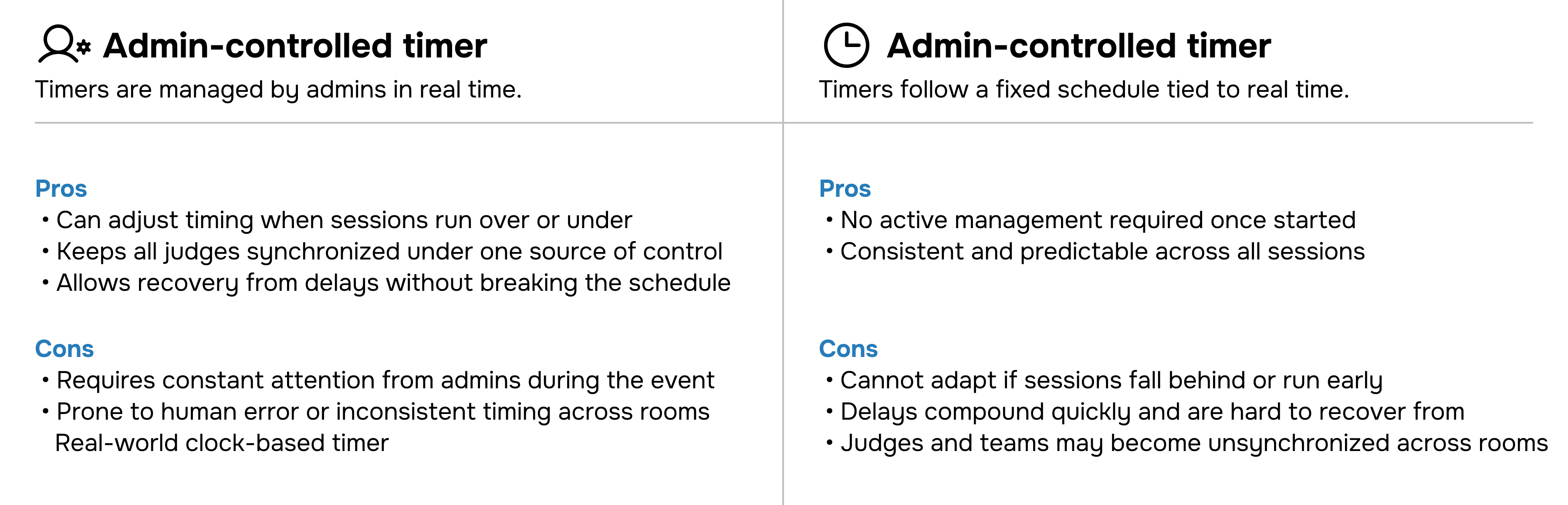
To address these challenges, two potential system approaches were explored before selecting a final direction.The admin-controlled timer approach was ultimately selected to provide flexibility while still enforcing structure.
SYSTEM DESIGN
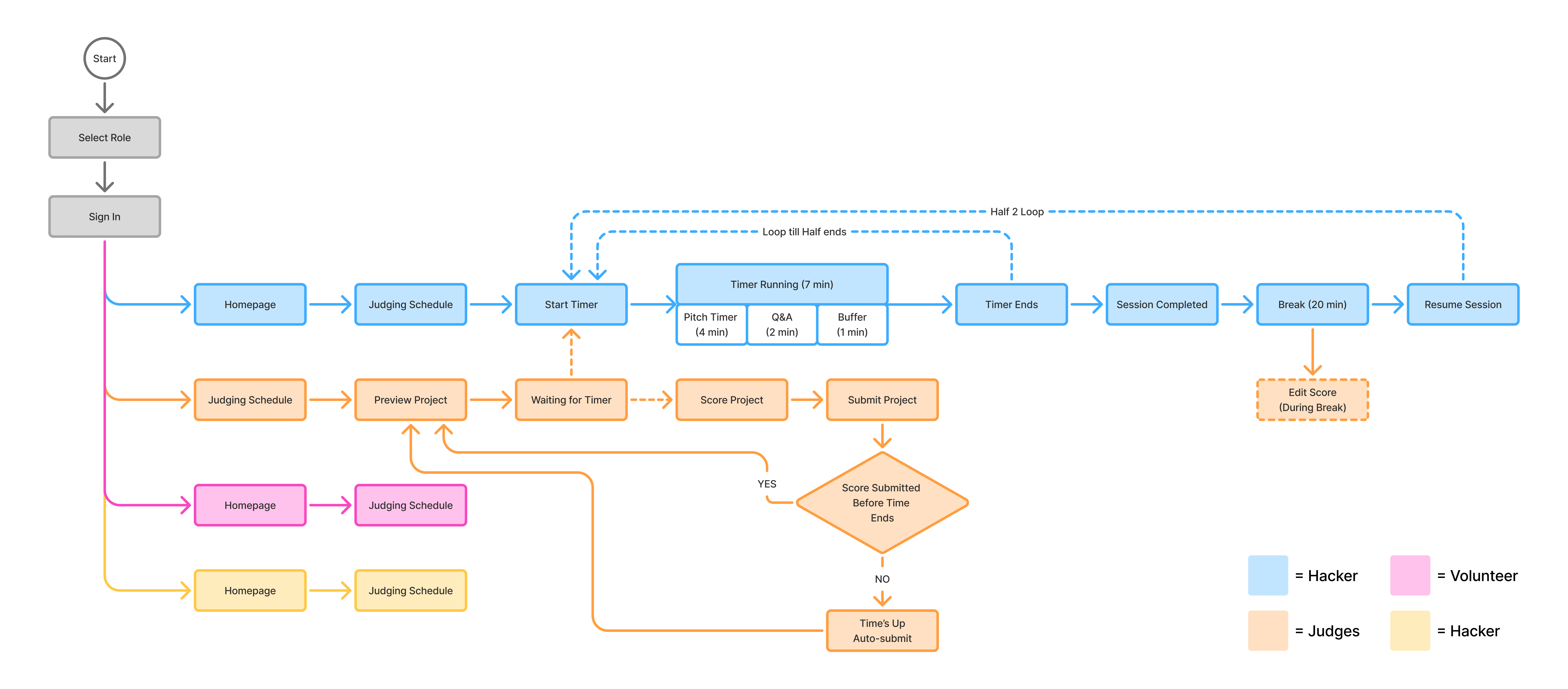
Flow Chart
Maps how different roles interact within the system, including how admins control timing and how judges progress through evaluations.
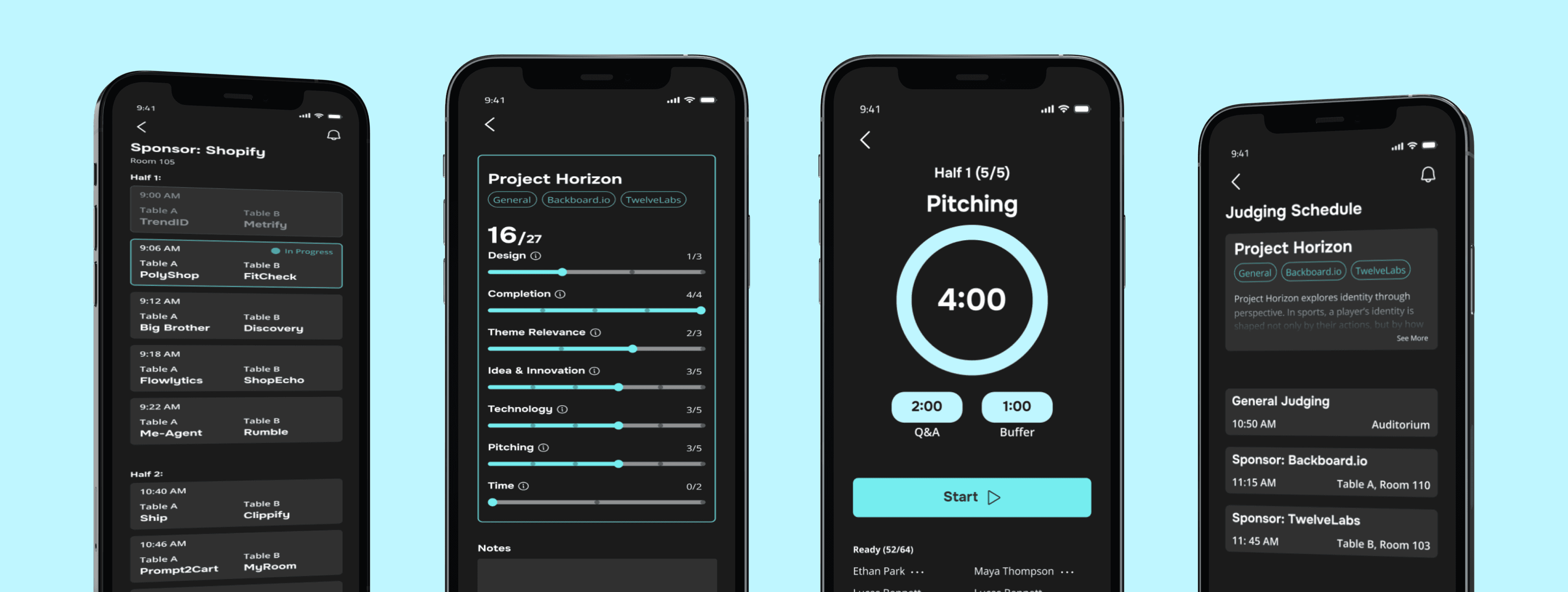
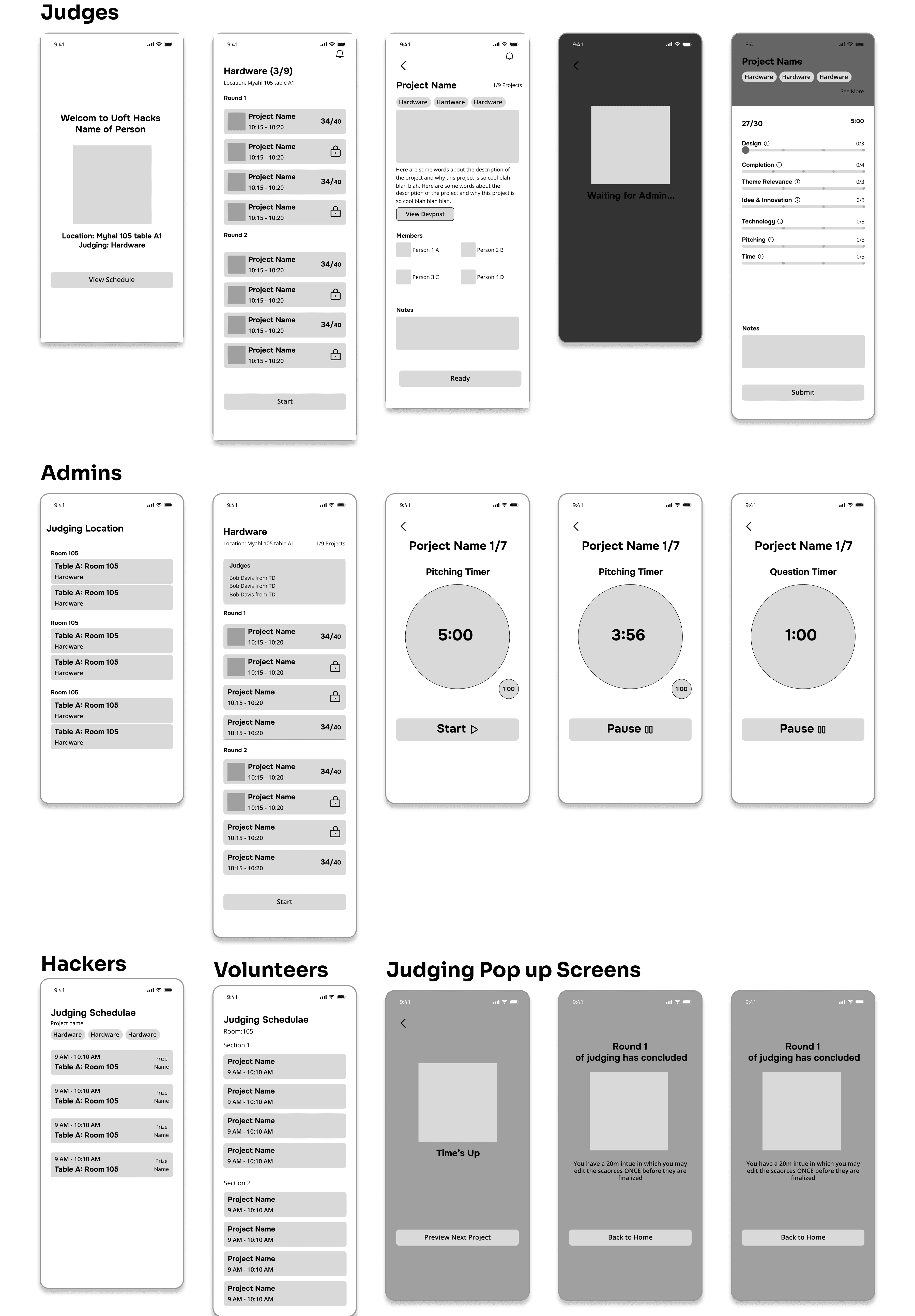
LOW - FI
Explored early concepts of how the judging system could function across different roles and workflows.
USER TESTING
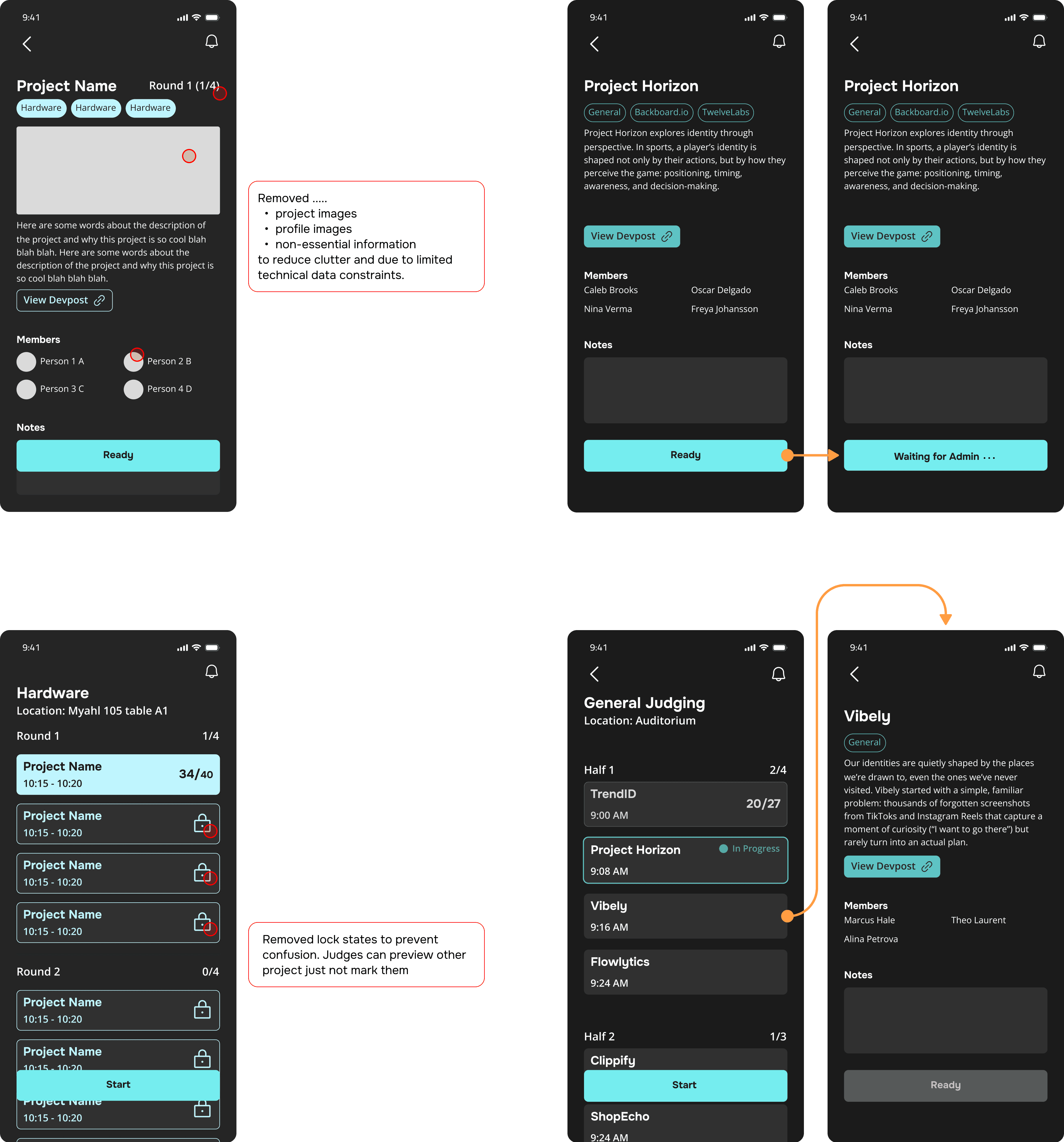
Conducted usability testing with 5 organizers, alongside reviews with VPs and engineers to ensure the system met operational needs and was technically feasible. Key improvements are outlined below
Overall Adjustments
Improved dark mode contrast for better readability
Standardized terminology to align with event language
Sessions → Halves
Reduced information to minimize clutter and accommodate technical data constraints.
Admin
Judges
Volunteer
**Click through the roles to see the improvements!**